I should clear something up at the start, because it has been bothering me. People sometimes assume, from the way I talk about poems, that I mentor writers. I do not. I have never had a workshop. I have never had students. I am not the right person for that job, and I would do it badly.
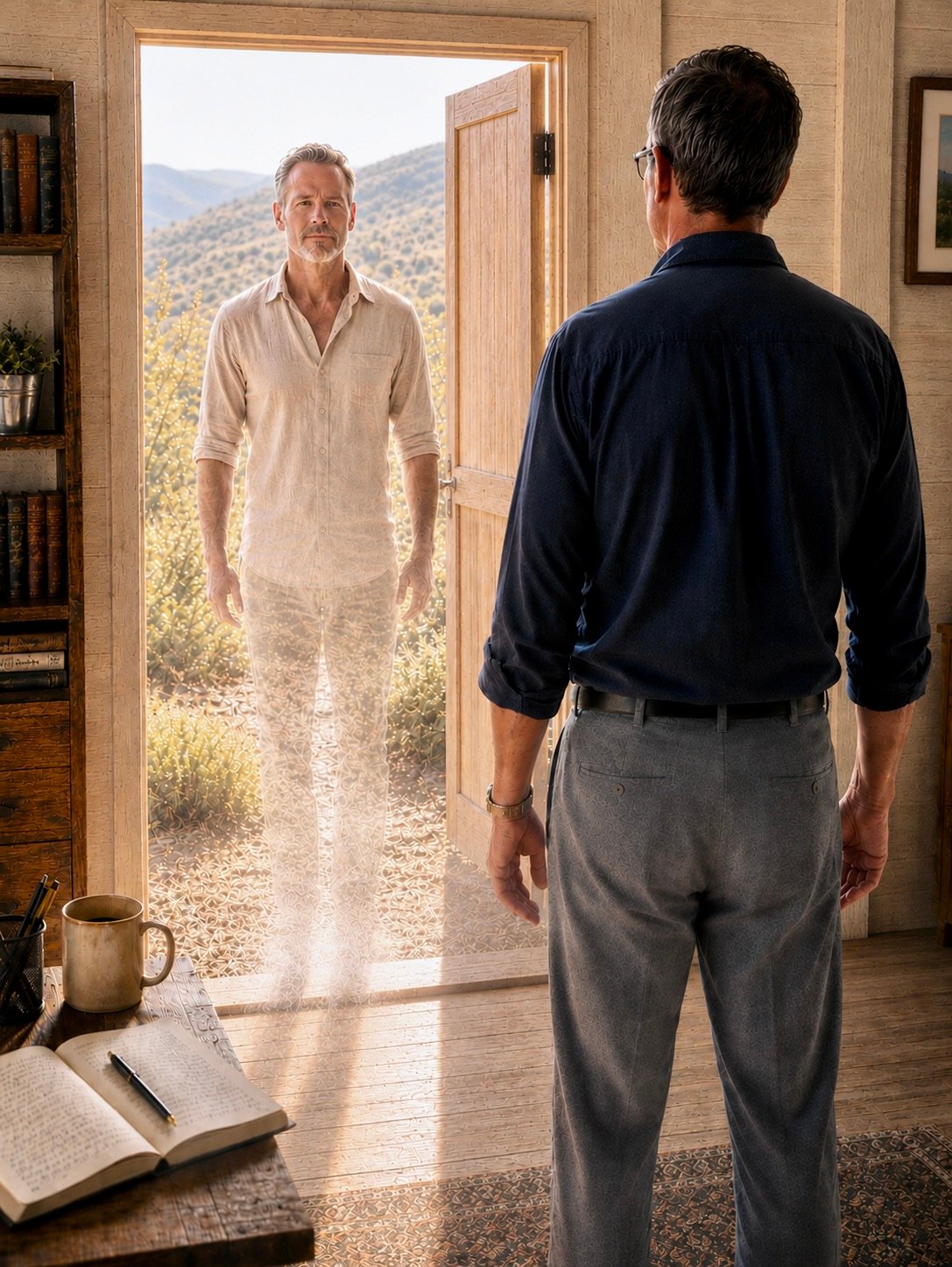
What I have, instead, is a long-running internal correspondence with the writers who shaped me, and with several earlier versions of myself. Most of what I would say in a letter to a writer I do not know, I would actually be saying to one of them. So this is a letter to one of them.
To the younger writer in me — and to anyone for whom the phrase fits —
You will, at some point, finish a poem and feel sure it is the best thing you have ever written. You will be wrong. You will, at some point, finish a poem and feel sure it is the worst thing you have ever written. You will also be wrong. The poem you are most certain about, in either direction, is almost never the poem you should be most certain about. Take that as a kindness, not an insult. It means you have ahead of you the long, slow training of becoming a halfway reliable witness to your own work.
You will spend a humiliating number of years trying to write the poem someone you admire would write. Eventually you will give it up — not because you have stopped admiring them, but because their poem has somebody else's body inside it. Your only job is to make sure your poem has yours. That sounds simple. It is not.
You will discover that revision is the actual work. The first draft is theatre. The second draft is detective work. The third draft is editing. The fourth draft, if you are lucky, is the place where the poem stops being yours and starts being itself. Do not skip a draft because you are tired. Do not skip a draft because you think the poem is "already there." It almost certainly is not. The draft you skip is the draft the reader will notice.

Fire Tree
In winter’s grasp, the tree stands bare, Leaves long gone, branches stark and spare. Above, the fiery clouds dance with flair, Kindling life, in the cold, thin air.
Coming soon — included in Where the Heart Still SpeaksYou will find that the worst writing days are the ones where you sound the most impressive on the page. The best ones are the ones where you sound like a person again. Trust the second kind. The first kind is almost always you flinching.
You will be tempted to perform suffering for material. Don't. The suffering will happen. You will not need to chase it. What you owe the poem is honesty about it, not aesthetics about it. There is a difference, and the reader can tell.
You will be told, at some point, by someone with an honest face, that you should write what you know. That advice is not exactly wrong, but it is incomplete. Write what you suspect. Write what you almost know but cannot prove. The poem that ends up on the page will be the part of that suspicion that turned out to be true. The act of writing it is how you find out.
Last thing. You will, occasionally, meet a sentence in your own draft that you did not put there — that arrived as if dictated, that does not sound like anything you have written before, that you cannot quite explain. Honor it. Do not try to rewrite it into your usual voice. Most poets I have loved have, somewhere in their work, a sentence like that. The sentence is the gift. Your job is not to take credit for it. Your job is to deserve it.
I am not your mentor. I am, at most, a slightly older version of you who is still working on the same problems. I do not have the answers. I have a few useful misunderstandings I have managed to outgrow. If any of them are useful to you, you are welcome to them. The rest of the work is yours, and only yours, and that is not a hardship. That is the entire point.
Yours, in ink and embers,