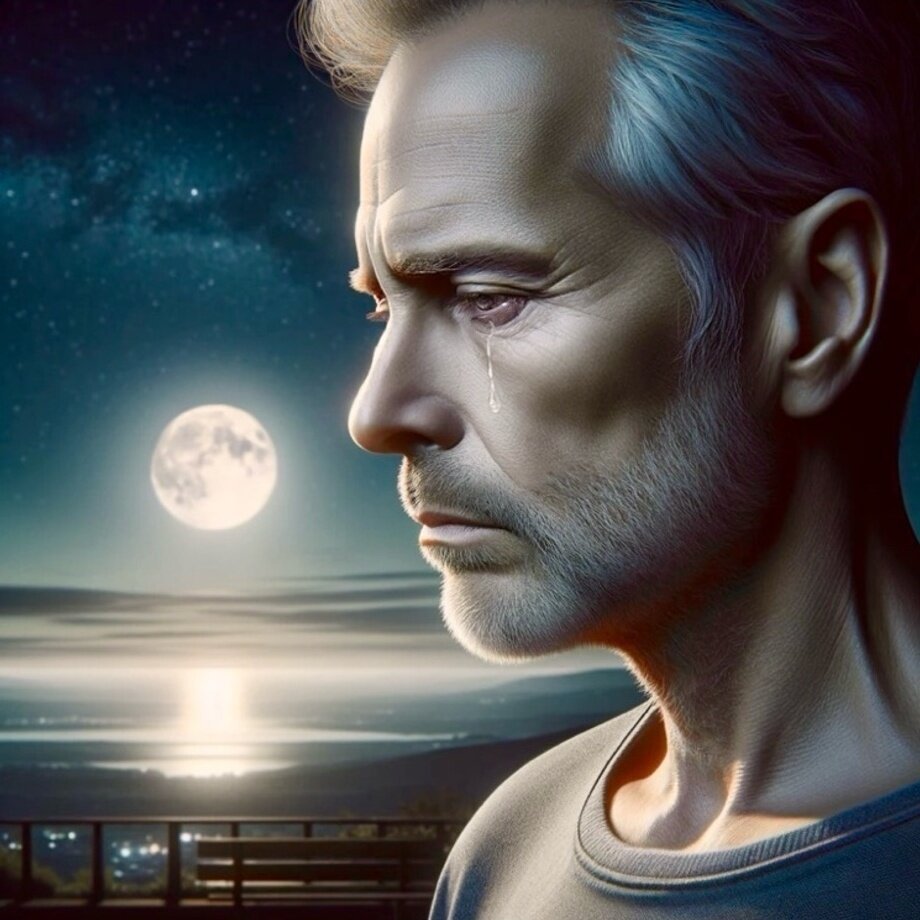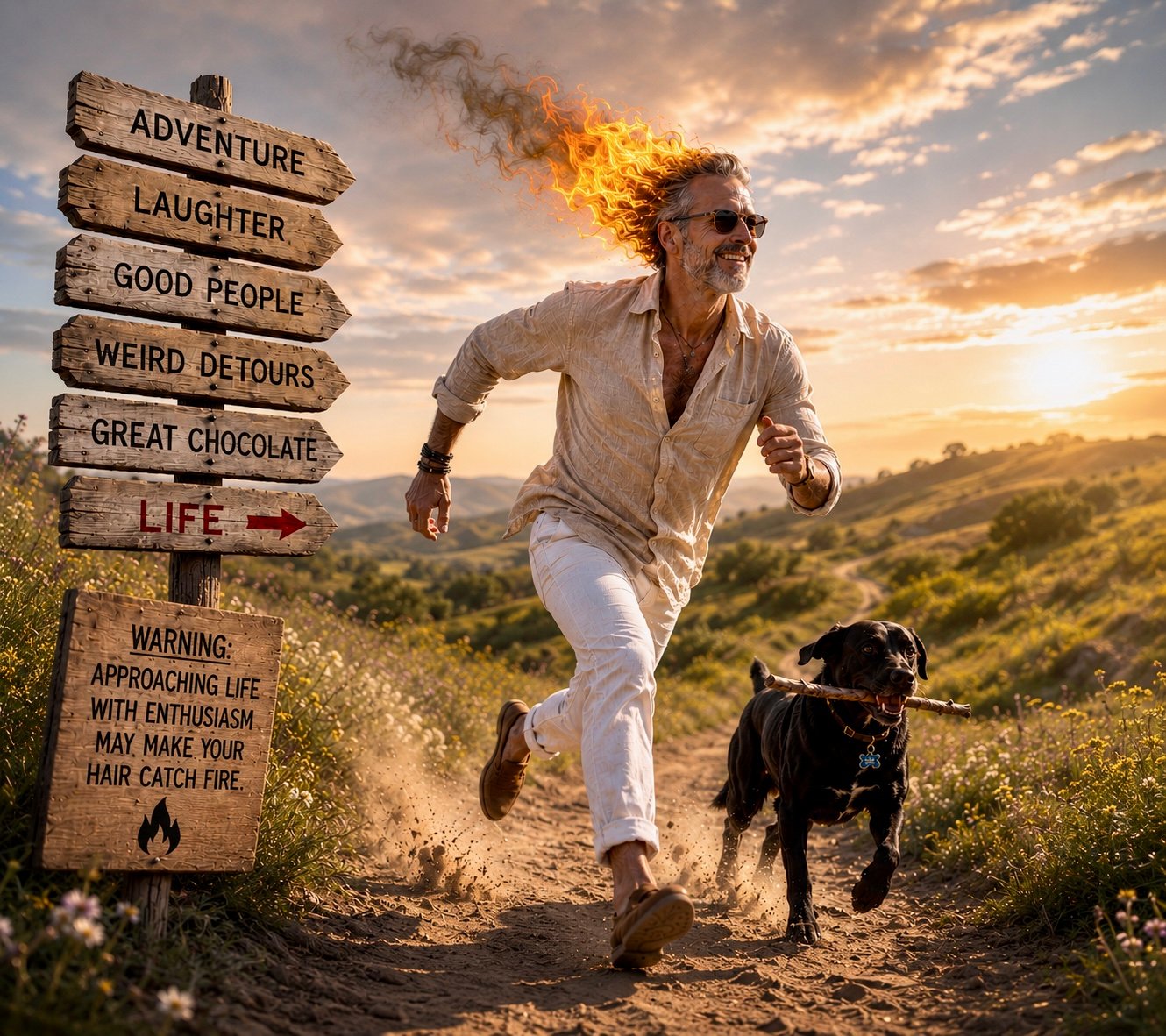
The rain started at noon and stayed until twenty to five, with the kind of conviction that suggests it has nowhere else to be. I had nowhere else to be either, which made us reluctant companions. I love a good storm. By four-forty, when the sky finally remembered to do something else, the day's plans had marinated long enough to feel like a dare.
The first plan was sea turtles. I had recent, confident information that they would be hatching. In reality, I was two months early. The beach was beautifully turtleless.
So I bought a beverage and walked on the beach anyway. The rain had been thorough — even the beaches were flooded, with a thin dry vein of land running down the middle as low tide pulled back, like the world had drawn me a path and dared me to follow it. I did.
Soon, a shadow overtook me from behind, and I screamed — there's no dignified word for it — like a girl. The shadow belonged to a sun-bleached, seasonally aged local man speaking a language I could've sworn wasn't what the locals were speaking, though a few words swam up out of it. He animately gestured for six full minutes with the conviction of a man delivering scripture. At one point, he took hold of my ankles and was pulling me to the ocean. I was briefly uncertain whether I was being assaulted or fitted for shoes I was, in fact, already holding in my hand. In a funny way, it was deeply ironic — he was pulling me back out toward the very body of water I had assumed he was trying to warn me about.
Eventually, the words gringo americanos and marea arrived together, and I understood: he was telling me that what looked like fifty feet of harmless shallow had a habit of taking Americans out to sea. I decided, for the sake of my ankles and the rest of me, to wade back toward the general population.
His name was Ron. I asked. He asked mine. He seemed surprised by his own name in a way I found oddly moving — a man named Ron, telling a stranger not to drown, on a beach where the turtles weren't coming. The world keeps its symmetries even when it's making no other sense.
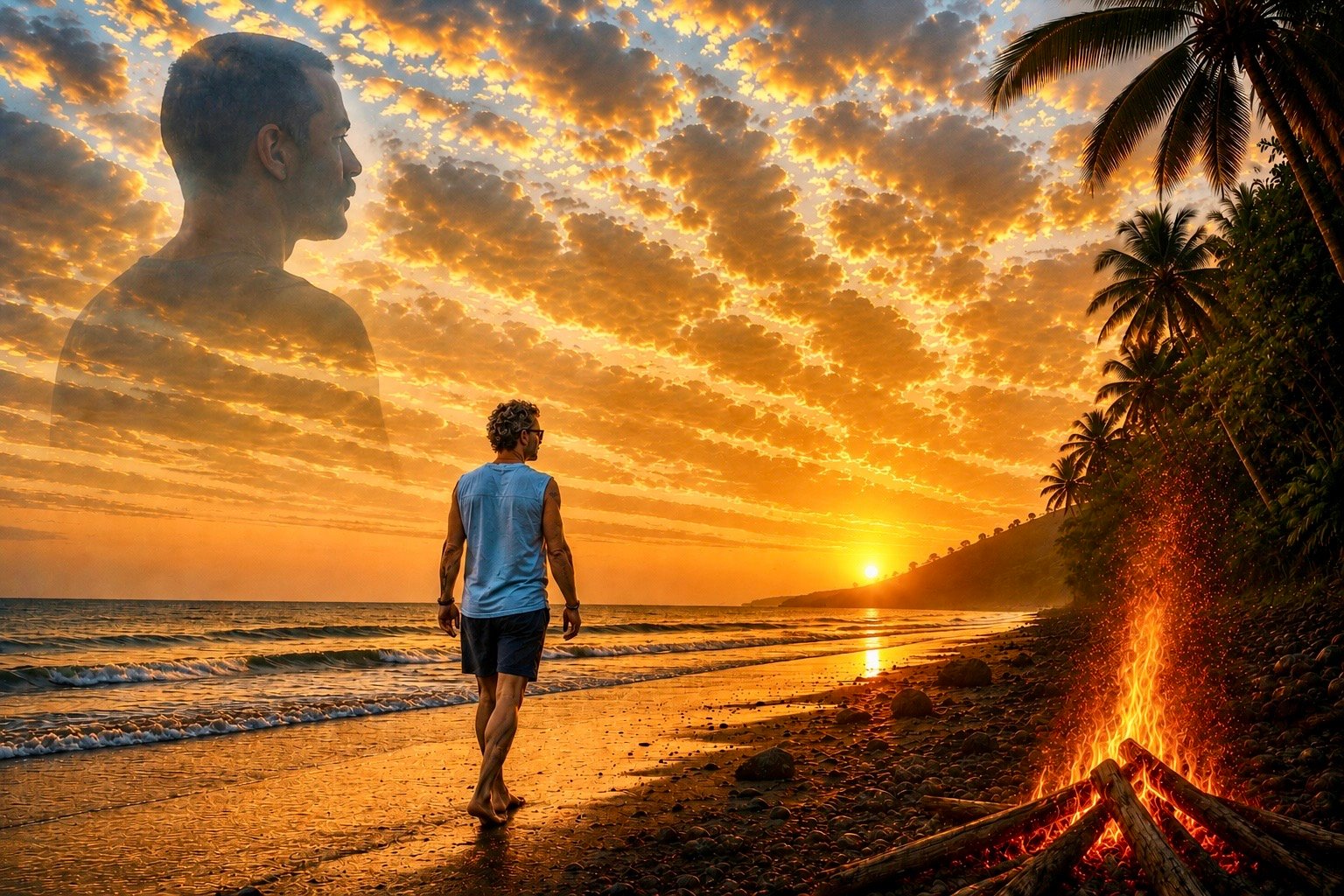
Ashes Without Ruin
You came like rain on salted skin, Then left before the tide could stay. I called your name above the surf; Warm waves pulled half my breath away.
Read the full poem →Back story: Two days into my trip, the Pacific took my phone twice in thirty seconds. There's a crack in the back I've been pretending wasn't there, and saltwater, it turns out, is unimpressed by my denial. The phone now performs admirably as a paperweight. As a communication device, less so. A few days buried in rice gave it back to me in thirty-to-sixty-second increments before it overheats and reboots, like a small flat animal that needs to nap between short walks. Still, thirty seconds of contact with anyone who speaks a language I speak is its own kind of grace.
I decided to drive back to Vicki and Ron's the way I knew. Everything looked familiar until it didn't. I drove longer than I should have before Route 34 failed to appear, and when I coaxed the phone into a brief lucid spell, it informed me I was on the opposite side of Jacó, having executed one fateful turn from which there was no U-turn. Twenty-two miles from my cousins' place, gas tank pushing empty, touring neighborhoods I had no ambition to tour. I passed the sister restaurant of a place I'd eaten at the night before — somewhere I'd heard of and had no plans of ever finding. Apparently, the plans were being made elsewhere.
It took four reboots to get close to home. I drove with the phone held out the window, half to cool it, half to clear the windshield, which was fogging from what I generously blamed on an overactive air conditioner and not on the quiet panting of a man losing his bearings. Bullfrogs bellowed from the ditches in a register that does not invite composure. Locals waved at me like I was one of them — meaning, I suspect, that I looked appropriately deranged (local).
What I keep turning over isn't the wrong turn or the dead phone or the man at the water's edge. It's how much of the day was something other than what I'd come for. The turtles I'd planned around. The route I trusted. The phone I'd assumed would be a phone. None of it stayed. And what arrived instead — a stranger's hand on my ankle, a restaurant I'd half-believed in, a name spoken back to me on a foreign beach — none of it could have been planned for, and none of it will stay either.
Maybe that's the whole lesson of a place that calls itself paradise. You come for one thing. You get another. You don't get to keep either. The trick, if there is one, is not to grip. Not the turtles that didn't hatch. Not the route that dissolved. Not the small kindness of a man named Ron, who will not remember me by tomorrow.
Hold it lightly. Let it cool. Hand it back to the tide.
Yours, in ink and embers,