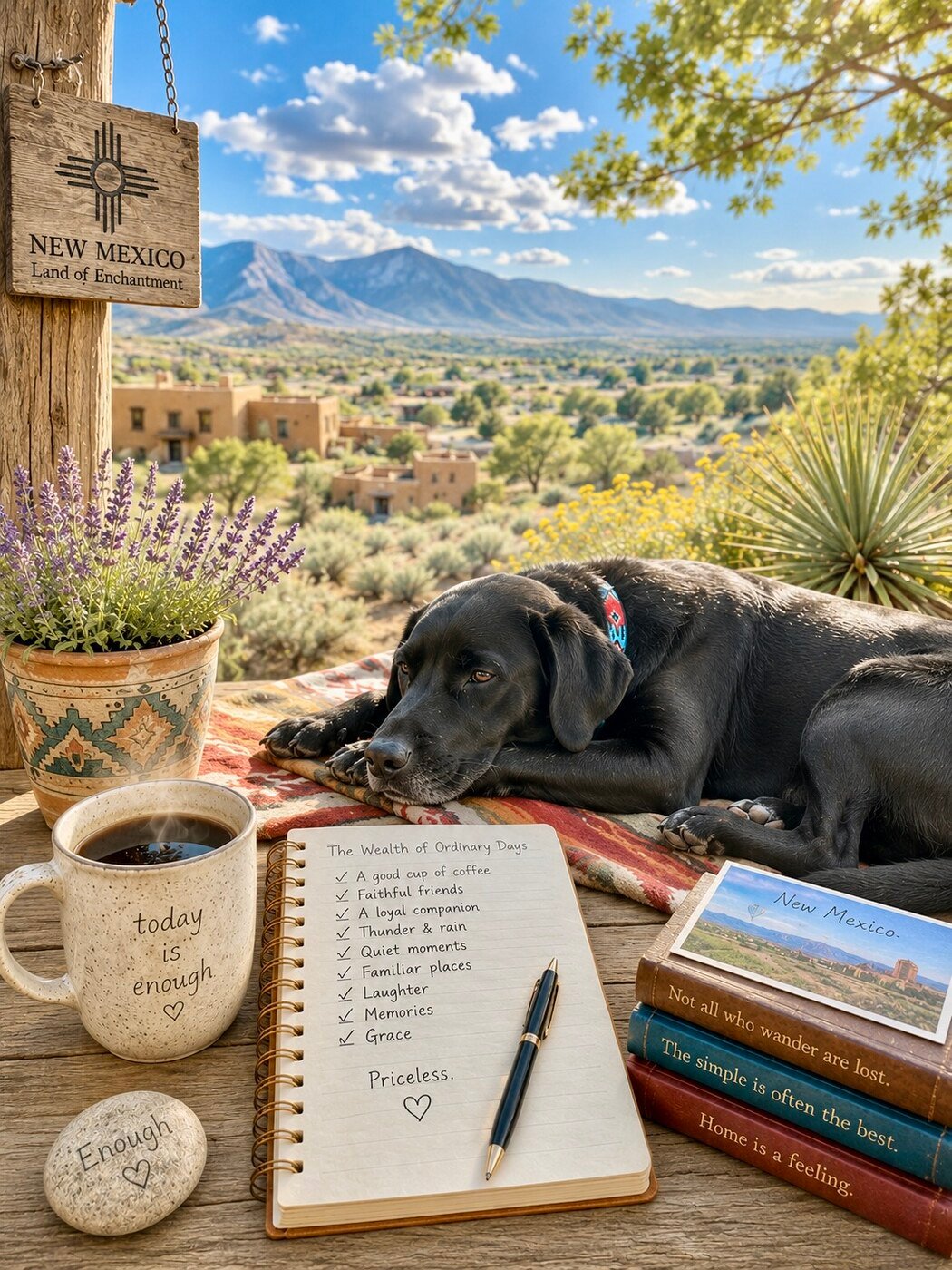
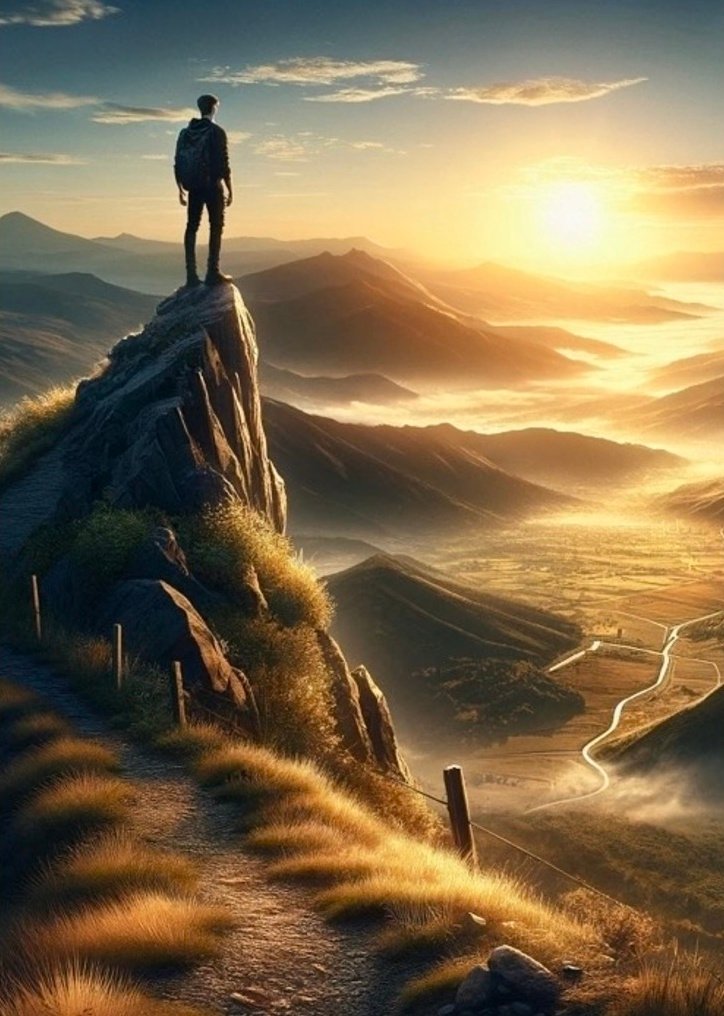
Santa Fe in February is quiet in a specific, instructive way. The tourists are gone. The sky is pewter and enormous. The mountains look serious. I moved here partly because I needed a place that would not accommodate noise — mine or anyone else's.
I am a talker. Or I was. The desert cured me, slowly, the way a good editor cures a writer of their bad habits: without mercy and without apology.
Some of my best poems started as things I almost said out loud and then didn't. The silence caught them first. I learned to let it.
The desert did not make me quiet all at once. It corrected me by repetition. The first few months I was here, I still tried to fill silence with explanation, with commentary, with the kind of verbal scaffolding I had relied on in louder places. Santa Fe did not reward any of it. The mountains stayed serious. The streets stayed sparse in winter. The air itself seemed to prefer economy. Slowly, without any interest in my comfort, the landscape taught me that not every thought needs to become speech in order to become real.
That lesson helped the poems immediately. So many drafts improve the minute I stop trying to outtalk their image. Silence catches lines before I ruin them with explanation. It lets tension stay tension. It lets a face remain partly in shadow. It gives the poem the same dignity the desert gives the day: enough room to be itself without me constantly arranging it into palatability. I do not think I understood how much noise I had been carrying until the high desert refused to carry it with me.
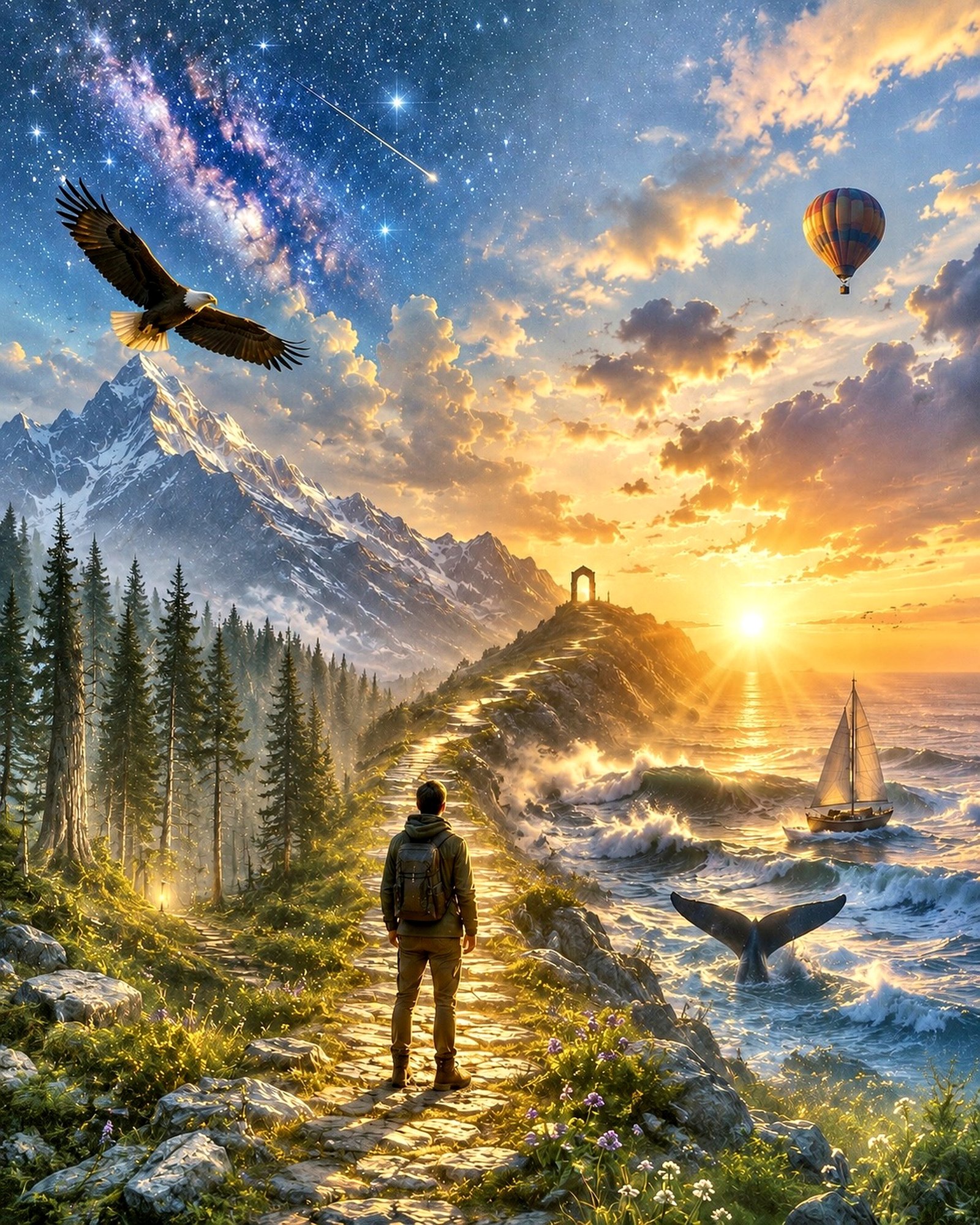
Dreams Unleashed
Whispers of courage in the silent night, Stars above, shining oh so bright. In each heart, a dream takes flight— Dare to do what you dare to dream, in sight.
Coming soon — included in Ink and EmbersThere is also intimacy in that kind of restraint. Looking closely at someone, or at a landscape, or at your own life, requires leaving some space unfilled. If I name everything too quickly, I stop seeing. The desert cured that impatience in me by making impatience feel ridiculous. What could hurry possibly add to a place that has been standing there for centuries? The poems that came after that realization got leaner, yes, but also more trusting. They did not need to explain every shadow. They only needed to hold it accurately.
I still talk plenty. Anyone who knows me can confirm that. But now I know the difference between speech that clarifies and speech that protects me from actually listening. The desert taught me the second category is usually more expensive than it looks. I am grateful for the correction. A good editor would have made the same cut. Santa Fe just did it with more sky.
That lesson shows up in relationships as much as in poems. The more comfortable I have become with silence, the less I need language to defend me from intimacy, uncertainty, or my own first reactions. The desert did not only change my writing voice. It changed the way I stay in a moment long enough for the truer sentence to emerge, whether that sentence is written or spoken.
I think that is why I keep crediting the place itself. The desert was not ornamental background to some internal awakening. It was the mechanism of it. Without the scale, the stillness, and the utter lack of interest in my old habits of over-explaining, I do not think I would have learned the lesson nearly as well.
Silence is a creative tool. Use it deliberately. Build it into your writing practice the same way you'd build in revision time. It is not the absence of something — it is where the something lives before you find it.
Yours, in ink and embers,