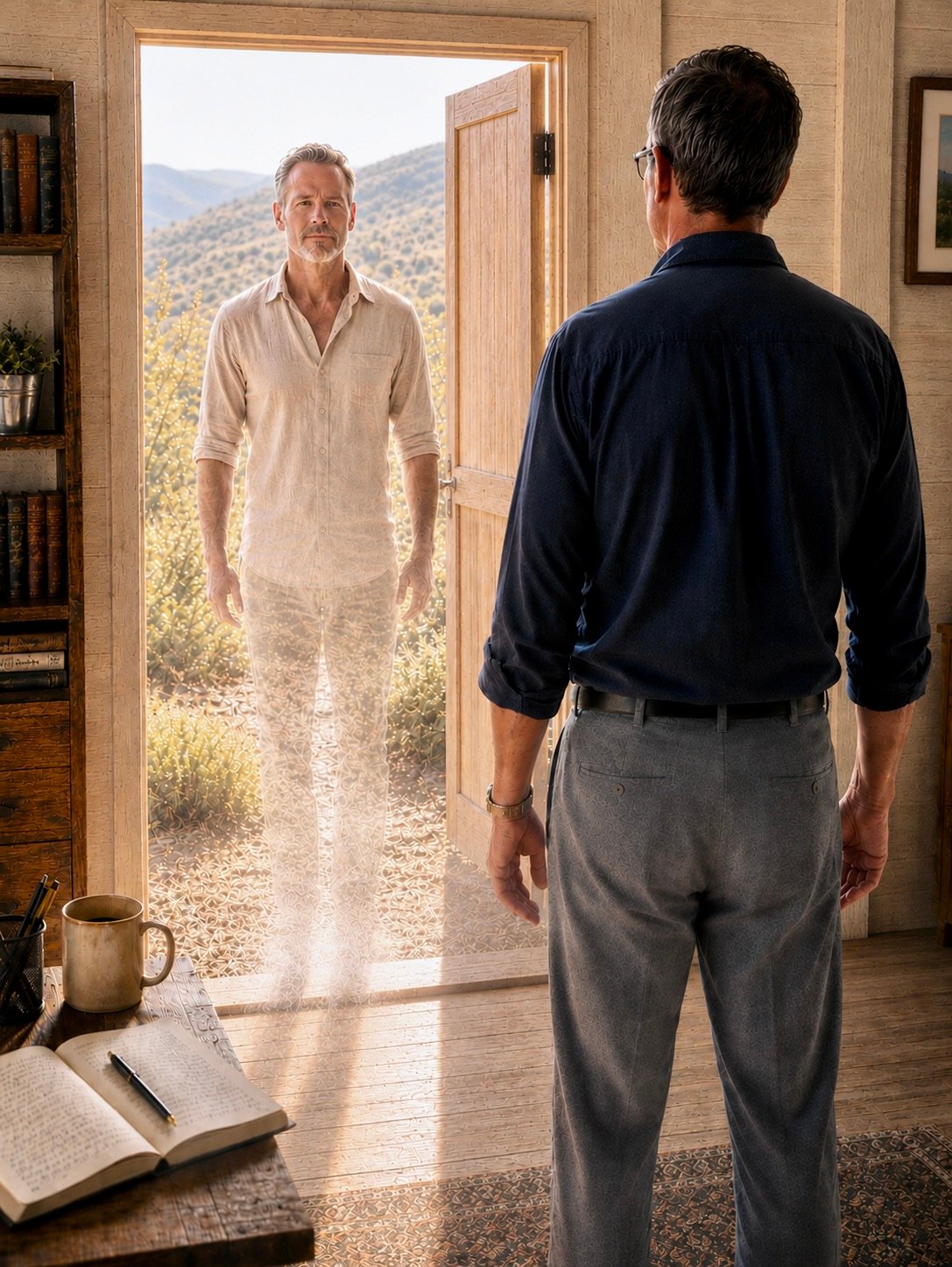
Twenty-six years today. My father died on February seventeenth, two thousand. I was thirty-three. He was, before anything else, the best friend I have ever had.
I do not write about him often. Not because I have nothing to say, but because the things I most want to say keep refusing to fit in a sentence the right size. He was my father, yes — that is the official designation — but the deeper truth is that he was my friend. He was my hero. He was the kind of man I have been trying, off and on, for a quarter of a century, to make sure I do not embarrass.
I had him for thirty-three years. That is more than a lot of people get with the person who taught them how to be one. I do not take it for granted. The list of things I learned from him is long and unsentimental: how to listen to someone before deciding what you think of them, how to fix what you can fix yourself before calling someone, how to be funny without being cruel, how to apologize without performing it, how to leave a place better than you found it as a basic operating principle. He never made any of this sound like a lesson. He just lived it, and you learned from being around him, and you didn't notice you had learned it until later, when you found yourself doing it without thinking.
The grief is twenty-six years old today, and grief that age has changed shape. It is no longer a wound. It is no longer even, most days, a sharp ache. It is, mostly, a presence. A chair I keep for him at certain meals. An instinct in certain conversations to glance over at where he would be standing. A pause before certain decisions in which I check, briefly and without ceremony, whether he would have nodded. He nods more often than I deserve. He shakes his head when I need it. The internal version of him I carry has been remarkably consistent over the years, which I take as evidence that I knew the actual man well.
I went outside this morning before the sun was fully up. The desert in February has a particular quality of light — the cold kind, the kind that makes the shadows hold their lines until almost ten in the morning. I walked further than I usually do. I did not talk to him out loud, because I am not a talking-out-loud kind of griever. But the walk was a conversation. He knew exactly what was being said.

The Serenity of Reflection
In the stillness of a visage, stories unfold, A garden of memories in each crease is told. Eyes like silent lakes, mirrors to the soul, Where time’s soft ripples gently roll.
Coming soon — included in Where the Heart Still SpeaksI had thought, at thirty-three, that the absence of him would slowly fade. It has not faded. It has — and this is the thing nobody tells you — gotten more interesting. I miss him more thoughtfully now. I miss specific decisions he would have weighed in on. I miss specific jokes I would have called him to repeat. I miss being able to say "you would have loved this" and have it land somewhere. The vague missing of the early years has become a much more particular missing in middle age, and I would not trade it for the easier kind. The particularity is the proof.
If I have any visible inheritance from him, it is this: I try to be the kind of presence in a room that he was. I do not always succeed. He did not always succeed either, which is the part I never appreciated until I had to attempt it myself. He worked at it. So do I. Some days I do better than others. Most days I am aware, somewhere just behind the day's surface, that he is the standard I am working toward.
I will live a lifetime missing him. That is not a complaint. That is a statement of how much there was to him, and how much, twenty-six years on, there still is.
I love you, Dad. Still. Always.
Yours, in ink and embers,